Iyengar Yoga with Alixe Steinmetz, CIYT

Now we begin / What are the Yoga Sutras? / What are the eight limbs of ashtanga yoga?
Alixe Steinmetz | OCT 26, 2023
yoga philosophy
atha yoganusasanam
yoga
iyengar yoga
patanjali
yoga sutras
ashtanga yoga
eight limbs of yoga
Atha Yoganusasanam
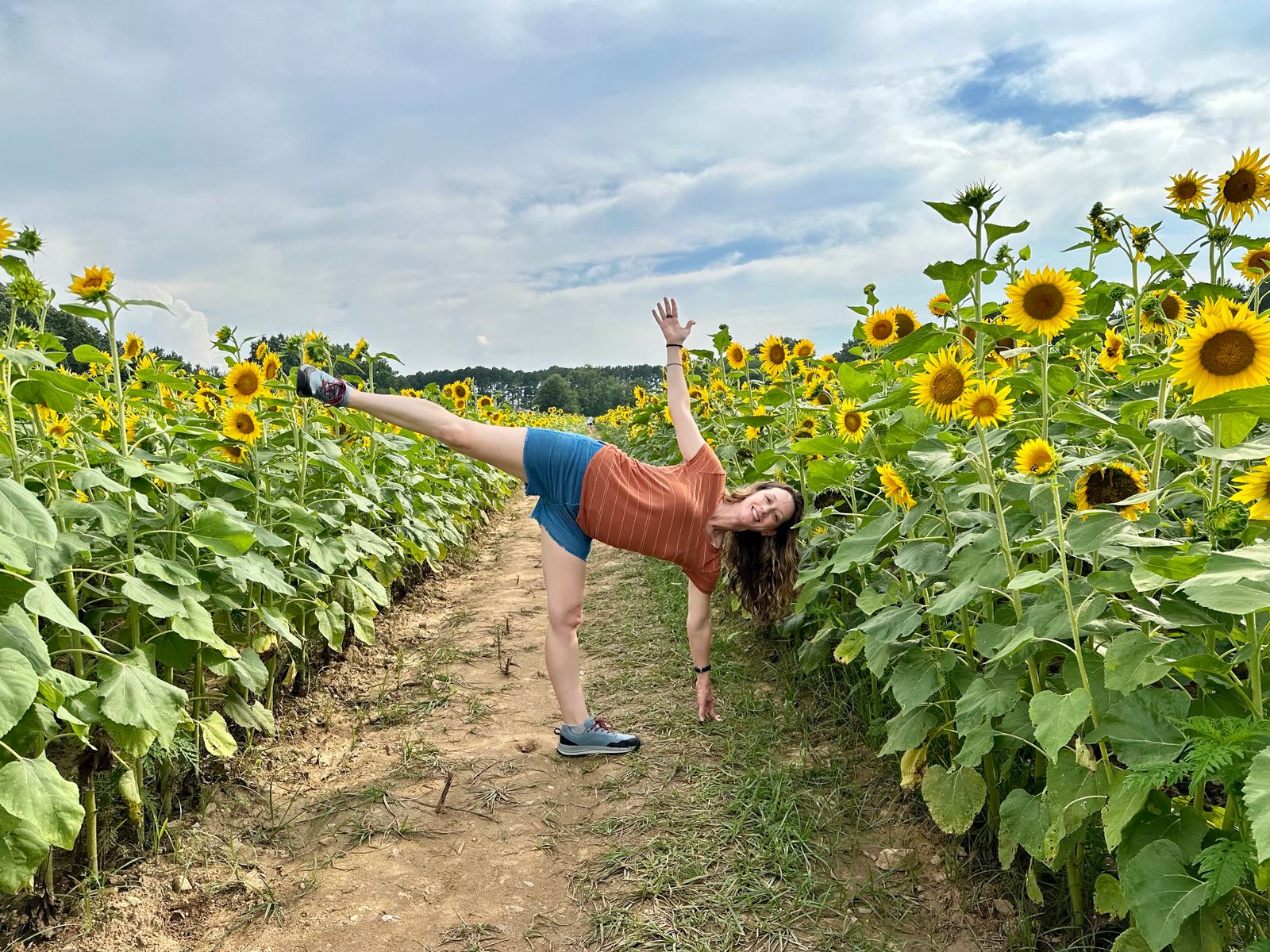
Atha yoganusasanam.
Put simply, "Now, we begin." This first of Patanjali’s Yoga Sutras is one I come back to a lot. I love that it is “now,” not a certain day or date or season, simply now. You don’t have to wait for a specified time to come to begin – begin now. If you got distracted, if you fell off your path, no worries – the time to begin is now.
So, that’s what I’m doing – I’m beginning now.
I read a lot, largely about yoga. I have books filled with underlined passages and pages and pages of notes. But they're all just sitting here. I'm hoping this blog will enable me to share what I find in all of that reading - all of the insights so relevant to our lives that can be found in the centuries-old philosophical texts of yoga.
As an aside, it’s amazing to me how often we feel like we are beginning something completely new only to realize that the seeds for whatever we’re “beginning” were planted long ago. I sat down to write, surrounded by yoga books, and started reading what each had to say about Sutra 1.1. I began with Living the Sutras by Kelly DiNardo and Amy Pearce-Hayden (an accessible, modern take on the sutras) and was struck by this: “The sutras were written for a renunciate living in solitude thousands of years ago, and it is challenging to build a bridge between the ancient theory and the modern-day application. We hope that Living the Sutras will be your bridge.” I’ve read this book multiple times and only just noticed this sentence. Ironically, my college thesis was translating a 13th century text (modern compared to texts such as the Yoga Sutras, I know) and theorizing why this text, written for solitary nuns, became a popular spiritual guide for a much wider audience. It’s amazing to think how that thesis writing process set the stage for where I find myself today – looking to ancient texts and pondering how they can be an effective spiritual guide for modern yoga practitioners.
Back on topic….
What are the Yoga Sutras?
Let’s start at the beginning: Written by Patanjali over 2,000 years ago, the Yoga Sutras are 196 aphorisms (concise statements of principle per Merriam-Webster). They begin with the sutra quoted above - Atha yoganusasanam. “Now we begin the practice of yoga.” Atha, translated as now, is said to be a sacred word, sometimes even placed on a similar footing to aum, making it an auspicious beginning for the Yoga Sutras (and, hopefully, this blog).
The sutras are divided into four books (padas): Samadhi Pada (complete absorption/bliss), Sadhana Pada (practice), Vibhuti Pada (mystic powers), and Kaivalya Pada (liberation). The first two books are the most accessible. The first book defines yoga – citta vrtti nirodha or the cessation of the fluctuations of the mind – then details ways to achieve this, largely through various forms of mental effort or meditation. For most of us, stilling the mind doesn’t come easily, which is where the second book comes in. What can you do to begin to catch glimpses of this stilled mind? The answer described in the second book is, unsurprisingly, practice yoga. But what does that mean?
Ashtanga Yoga – the Eight Limbs
Practicing yoga is more than just doing poses (or asanas in Sanskrit). In fact, Patanjali outlined eight limbs of yoga, known as ashtanga yoga. (The Sanskrit word ashtanga means eight limbs.) These eight limbs are Yama, Niyama, Asana, Pranayama, Pratyahara, Dharana, Dhyana, and Samadhi. All eight are essential to the yogic path. Path might be misleading, though, because the limbs are not to be done in order but are instead practiced simultaneously, creating a kind of spiral curriculum. (In case you’re not familiar with this concept, I found a great definition from an article posted by the University of Virginia School of Medicine: “A spiral curriculum is one in which there is an iterative revisiting of topics, subjects, or themes throughout the course. A spiral curriculum is not simply the repetition of a topic taught. It requires also the deepening of it, with each successive encounter building on the previous one.”)
So what are the definitions of the eight limbs in this spiral curriculum of yoga?
Yama – how to be towards others – ahimsa (non-harming), satya (truthfulness), brahmacharya (moderation), asteya (non-stealing), aparigraha (non-hoarding)
Niyama – how to be towards oneself – sauca (cleanliness), santosa (contentment), tapas (self-discipline and passion for what you do), svadyaya (self-study), Isvara-pranidhana (devotion to something larger than yourself)
Asana – physical postures which involve pose (assuming a physical posture) and repose (reflecting on how the posture affects body, mind, and breath, hopefully ultimately achieving some tranquility)
Pranayama – “the science of breath, which leads to the creation, distribution, and maintenance of vital energy” (from The Tree of Yoga); pranayama connects the physical and spiritual
Pratyahara – turning inward; withdrawal of the senses
Dharana – concentration; focused attention
Dhyana – meditation; complete balance/equanimity
Samadhi – “absorption, experience of the grace of the soul” (Core of the Yoga Sutras)
You may have heard the phrase "live your yoga" - understanding and pursuing these eight limbs, both individually and together, is how you can do just that.
(In Iyengar Yoga, which is interestingly also often taught as a spiral curriculum, these eight limbs are fully integrated into asana instruction and practice. More on that later….)
Until next time, be well!
Sources consulted:
Core of the Yoga Sutras: The Definitive Guide to the Philosophy of Yoga, B.K.S. Iyengar
Living the Sutras: A Guide to Yoga Wisdom Beyond the Mat, Kelly DiNardo and Amy Pearce-Hayden
Light on the Yoga Sutras of Patanjali, B.K.S. Iyengar
What is a Spiral Curriculum? by R.M. Harden and N. Stamper, found at https://med.virginia.edu/faculty-affairs/wp-content/uploads/sites/458/2016/04/2010-3-23.pdf
The Tree of Yoga, B.K.S. Iyengar
Yaugika Manas, B.K.S. Iyengar
The Yoga Sutras of Patanjali: A Collection of Translations, Popsi Narasimhan
The Yoga Sutras of Patanjali: A New Edition, Translation, and Commentary, Edwin F. Bryant
Alixe Steinmetz | OCT 26, 2023
Share this blog post

 OfferingTree